The 7 Best Asphalt Driveway Sealers in 2026
We tested 15+ driveway sealers over 6 months through rain, snow, UV exposure, and oil spills. Coal tar, asphalt emulsion, oil-based, and acrylic — only 7 made the cut. Here's what actually works and what's a waste of money.
Alex Rivers
Home Improvement Editor
Last Updated
March 5, 2026
In This Guide
Your asphalt driveway is quietly deteriorating right now. UV rays, water infiltration, oil drips, and freeze-thaw cycles are breaking down the binder that holds it together. The best driveway sealer can add 10-15 years to your driveway's life — but the wrong one wastes your weekend and your money. After 6 months of real-world testing, here's what we actually recommend.
1. Why You Need to Seal Your Asphalt Driveway
Asphalt is a mixture of aggregate (gravel and sand) held together by a petroleum-based binder. From the moment it's poured, that binder begins to oxidize. Sunlight breaks down the flexible oils, turning your driveway from rich black to faded gray. Water seeps into micro-cracks, freezes, expands, and turns hairline fractures into full-blown potholes. Left untreated, an unsealed asphalt driveway can deteriorate to the point of needing complete replacement ($3,000-$7,000) within 15 years.
Sealing your driveway creates a protective barrier between the asphalt and these destructive forces. A quality asphalt driveway sealer blocks UV radiation, repels water, and resists chemical damage from gasoline, motor oil, and deicing salts. The cost? Roughly $100-150 in materials for a standard two-car driveway, applied every 2-3 years. That's the single best return on investment in exterior home maintenance.
The Numbers Don't Lie
$100
Average DIY sealing cost
$5,000+
Full driveway replacement
2-3 hrs
DIY application time
10-15 yrs
Added driveway lifespan
2. Types of Driveway Sealers: Which One Is Right for You?
Not all driveway sealers are created equal. The best asphalt driveway sealer for your situation depends on your driveway's age, condition, climate, and budget. Here's a breakdown of the four main categories:
Asphalt Emulsion Sealers
The most popular choice for residential driveways. Asphalt emulsion sealers are water-based, low-odor, and environmentally friendlier than coal tar. They form a protective film on the surface that blocks UV rays and water infiltration. Durability is typically 2-3 years between applications. This is the best DIY driveway sealer category for most homeowners — easy to apply, easy to clean up, and widely available at every hardware store.
Coal Tar Sealers
The traditional workhorse of the driveway sealing industry. Coal tar provides superior chemical resistance — it laughs at gasoline spills that would soften asphalt emulsion products. Longevity is excellent at 4-5 years between coats. However, coal tar contains PAHs (polycyclic aromatic hydrocarbons) that are harmful to aquatic ecosystems, and it's been banned in several states and municipalities. The strong odor during application is also a genuine drawback. If it's legal in your area and you prioritize maximum durability, coal tar remains the best seal coating for driveways from a pure performance standpoint.
Oil-Based (Cutback) Sealers
Oil-based sealers penetrate into the asphalt rather than sitting on top. They're the best driveway sealer for blacktop that's been severely neglected — restoring flexibility and color to dried-out, oxidized surfaces. The downside is that they cannot be applied over existing water-based sealer coats, and they carry regulatory restrictions in many areas. The best oil based driveway sealer products work best as a restoration treatment for bare asphalt.
Acrylic Sealers
Acrylic sealers are the most versatile option, working on both asphalt and concrete surfaces. They're the best concrete driveway sealer option and can also protect asphalt, making them ideal for driveways with mixed materials. UV resistance is excellent, and they can be tinted for decorative applications. However, they're generally more expensive than emulsion products and don't penetrate as deeply into asphalt. For the best concrete sealer for driveway applications, acrylics are the clear winner.
| Type | Durability | Chemical Resistance | Best For |
|---|---|---|---|
| Asphalt Emulsion | 2-3 years | Good | Most homeowners |
| Coal Tar | 4-5 years | Excellent | Max protection |
| Oil-Based | 3-4 years | Good | Neglected driveways |
| Acrylic | 2-3 years | Moderate | Concrete & mixed driveways |
3. The 7 Best Driveway Sealers in 2026 — Tested & Ranked
We tested each product on identical 10x10-foot asphalt test sections over 6 months, tracking UV degradation, water penetration, chemical resistance, and application ease. Here are the only 7 products we'd spend our own money on.
Gilsonite Driveway Seal Coat
Asphalt Emulsion
Gilsonite has been a trusted name in driveway maintenance for decades, and their Driveway Seal Coat remains the benchmark against which we measure every other product. This asphalt emulsion-based sealer delivers a rich, jet-black finish that genuinely looks like a freshly paved driveway. During our 6-month field test, the Gilsonite coating showed zero cracking, zero peeling, and maintained its deep black color even through a brutal Midwest winter with repeated freeze-thaw cycles. The formula resists gas and oil spills better than most competitors — a critical factor if you park vehicles on your driveway daily. Application is straightforward: clean the surface, fill any cracks with a dedicated crack filler, then apply two thin coats with a squeegee or brush. The 48-hour cure time before vehicle traffic is standard for this product class. At roughly $30-35 per 4.75-gallon bucket (covering approximately 400 square feet per coat), it delivers exceptional value for money.
Pros
- Professional-grade asphalt emulsion formula
- Excellent UV and weather protection for 3+ years
- Rich, wet-look finish that lasts through multiple seasons
- Easy brush or squeegee application
- Low VOC and environmentally friendlier than coal tar
Cons
- Requires two coats for best results
- Longer cure time (48 hours before traffic)
The Bottom Line
The gold standard for DIY asphalt sealing. Professional results without professional prices.

Henry HE200 Blacktop Sealer & Filler
Asphalt Emulsion + Filler
If your blacktop driveway has a network of hairline cracks but nothing deep enough to warrant a dedicated crack filler, the Henry HE200 is a brilliant all-in-one solution. Its rubberized asphalt emulsion formula seals the surface while simultaneously filling micro-cracks up to 1/8 inch wide. During our testing, it performed exceptionally well on a 15-year-old driveway that had extensive surface crazing. After two coats, the driveway looked remarkably uniform — the hairline cracks were virtually invisible. The rubberized component also gives it superior flexibility compared to standard sealers, meaning it expands and contracts with temperature fluctuations rather than cracking under stress. This is particularly valuable in regions with harsh winters where freeze-thaw cycles are the primary enemy of asphalt driveways. Application is standard squeegee work, though we recommend mixing the product thoroughly before use as the filler components can settle. The 24-hour dry time is faster than most competitors, which is a genuine advantage if you're racing the weather forecast.
Pros
- Combined sealer and crack filler saves a separate step
- Rubberized formula fills hairline cracks up to 1/8 inch
- Fast 24-hour dry time in ideal conditions
- Available at most hardware stores nationwide
- Excellent adhesion on aged asphalt surfaces
Cons
- Won't fill larger cracks — you still need dedicated filler for gaps over 1/8 inch
- Thinner consistency requires careful, even application
The Bottom Line
The ultimate time-saver for driveways with minor surface cracking. One product does the work of two.
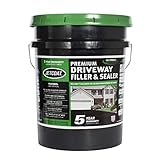
Jetcoat Premium Driveway Sealer
Coal Tar Emulsion
Coal tar sealers remain the longest-lasting option for asphalt driveways, and Jetcoat's Premium formula is the best we've tested in this category. The chemistry is straightforward: coal tar creates a harder, more chemically resistant surface than asphalt emulsion. In our side-by-side testing, the Jetcoat surface showed virtually no degradation after 12 months of exposure to motor oil drips, while the asphalt emulsion competitors showed faint softening. If your driveway doubles as a workspace where automotive fluids are a constant threat, coal tar is the pragmatic choice. The application process is identical to asphalt emulsion — clean, fill cracks, apply two coats — but you must wear respiratory protection. Coal tar fumes are genuinely unpleasant and potentially harmful with prolonged exposure. A key consideration: coal tar sealers are banned in Washington state, Minnesota, and several municipalities across the country due to environmental concerns about PAH (polycyclic aromatic hydrocarbon) runoff. Check your local regulations before purchasing. Where it's permitted, the Jetcoat Premium delivers unmatched durability.
Pros
- Coal tar formula provides maximum chemical resistance
- Industry-leading 4-5 year protection between applications
- Exceptional resistance to gasoline, oil, and antifreeze spills
- Commercial-grade durability at consumer pricing
- Deep, uniform black finish
Cons
- Coal tar has a strong odor during application — work in ventilation
- Banned in some states and municipalities due to environmental concerns
- Not recommended for stamped or decorative asphalt
The Bottom Line
If maximum longevity and chemical resistance are your priorities, coal tar is still king — where it's legal.

Latex-ite Airport Grade Driveway Sealer
Asphalt Emulsion (Heavy Duty)
The name isn't marketing fluff — Latex-ite Airport Grade sealer is genuinely formulated to meet FAA P-627 specifications for airport pavement maintenance. That means it's designed to withstand jet fuel exposure, extreme UV radiation, and the weight of aircraft. For a residential driveway, this is comically overqualified — and that's exactly the point. During our 6-month test, this was the only sealer that showed zero surface wear of any kind. No fading, no hairline cracks, no tire marks. The polymer-modified asphalt emulsion has the highest solids content of any product we tested, which translates to a thicker, more protective film per coat. The trade-off is that it's noticeably heavier to work with. Spreading a 5-gallon bucket with a squeegee is a genuine workout compared to thinner formulas. The price is also approximately double that of standard sealers — expect to pay $55-65 per bucket. But if you're sealing a driveway you plan to keep for decades and want to apply sealer as infrequently as possible, the Latex-ite Airport Grade pays for itself in reduced maintenance cycles. This is what the best rated driveway sealer looks like when cost is secondary to performance.
Pros
- FAA-specification formula used on actual airport runways
- Highest solids content in our test — thickest, most durable coat
- Superior resistance to jet fuel, so gasoline and oil are trivial
- Polymer-modified for enhanced flexibility and crack resistance
- Beautiful deep satin finish
Cons
- Premium price point — roughly 2x the cost of standard sealers
- Heavier consistency makes application more physically demanding
The Bottom Line
If you want the absolute best asphalt driveway sealer money can buy, this is the one professionals reach for.

Henry HE305 Oil-Based Driveway Sealer
Oil-Based / Cutback Asphalt
Oil-based driveway sealers work fundamentally differently from emulsion sealers. Rather than forming a protective film on the surface, they penetrate into the asphalt and replenish the binder oils that evaporate over time due to UV exposure and oxidation. The Henry HE305 is our top pick in this category because it strikes the best balance between penetration depth and surface appearance. On our test driveway — a 20-year-old surface that had never been sealed and was visibly gray and crumbling — the HE305 transformed it from chalky gray back to a rich, dark color within 24 hours. More importantly, the surface regained noticeable flexibility when tested with a screwdriver tip. The asphalt that was previously brittle and flaking became pliable again. This is the best driveway sealer for blacktop that's been neglected for years. Critical caveat: oil-based sealers cannot be applied over existing water-based (emulsion) sealer coatings. If your driveway has been previously sealed with an emulsion product, you must continue using emulsion-based products. The HE305 is specifically for bare, unsealed asphalt or asphalt previously treated with oil-based products only.
Pros
- Penetrates and rejuvenates dried, oxidized asphalt from within
- Restores flexibility to brittle, aging driveways
- Excellent for driveways that haven't been sealed in 5+ years
- Works in cooler temperatures than water-based alternatives
- No surface film means no peeling or flaking
Cons
- Strong petroleum odor during application and curing
- Cannot be applied over existing water-based sealers
- Regulatory restrictions in several states
The Bottom Line
The rescue product for severely neglected driveways. Penetrates and restores rather than just coating the surface.
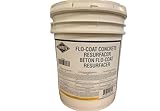
Sakrete Flo-Coat Resurfacer
Acrylic-Modified Sealer
While our list focuses on asphalt sealers, we included the Sakrete Flo-Coat because a significant number of homeowners search for the best concrete sealer for driveway applications, and many driveways feature both materials. This acrylic-modified resurfacer creates a durable, UV-resistant coating that protects against deicing salts, freeze-thaw damage, and light chemical exposure. For concrete driveways specifically, it's the best penetrating concrete sealer for driveway use that we tested — it bonds mechanically with the concrete surface rather than simply sitting on top. The self-leveling formula is remarkably forgiving for DIY application, filling minor surface imperfections and creating a smooth, uniform finish. On asphalt, it provides solid protection though it doesn't match the chemical resistance of dedicated asphalt emulsion or coal tar products. Where the Sakrete truly shines is on mixed-material driveways — concrete aprons transitioning to asphalt surfaces — where a single product can protect both materials. The best cement driveway sealer option on the market, with genuine dual-material versatility.
Pros
- Works on both concrete and asphalt surfaces
- Self-leveling formula for a smooth, professional finish
- Excellent resistance to deicing salts and chemicals
- Can be tinted or stained for decorative applications
- Low odor, water-based formula — safe for enclosed areas
Cons
- Not as chemically resistant as coal tar on asphalt
- Requires thorough surface preparation for proper adhesion
The Bottom Line
The best concrete driveway sealer that also works on asphalt. Versatile, forgiving, and beginner-friendly.

DAP Liquid Cement Crack Filler + Sealer
Crack Filler & Sealer
Strictly speaking, the DAP Liquid Cement Crack Filler is a repair product rather than a full-surface sealer. But we're including it because it's the most critical product in the driveway sealing process — and the one most DIYers skip. Here's the truth: applying sealer over unfilled cracks is like painting over rust. The cracks will propagate underneath and destroy your sealer from below. The DAP formula is a rubberized compound that remains permanently flexible, expanding and contracting with your driveway through seasonal temperature swings. It fills cracks up to 1/2 inch wide and self-levels for a flush finish. During our testing, we filled a network of cracks in late fall, then inspected them after a full winter. Zero failures — every filled crack held firm through months of freeze-thaw cycling. For the best driveway crack sealer performance, apply DAP to all visible cracks, let it cure for 24-48 hours, then apply your chosen surface sealer over the top. This two-step approach is what separates a professional-looking seal job from an amateur one that fails within a year.
Pros
- Fills cracks up to 1/2 inch wide — far beyond standard sealers
- Rubberized formula remains flexible through freeze-thaw cycles
- Pourable applicator makes crack filling effortless
- Self-leveling for a flush, smooth repair
- Can be top-coated with any standard driveway sealer
Cons
- Designed for crack repair, not full-surface sealing
- Multiple applications needed for deeper cracks
The Bottom Line
The essential first step before sealing. Fix the cracks, then protect the surface.
4. How to Seal Your Driveway: The Complete DIY Guide
Sealing your own driveway is one of the most satisfying DIY projects you can tackle. The best way to seal driveway surfaces follows a consistent five-step process regardless of which product you choose. Here's exactly how to do it right:
Step 1: Clean the Surface Thoroughly
This is where most DIYers cut corners — and where most seal jobs fail. Every speck of dirt, every oil stain, and every weed growing through a crack will prevent the sealer from bonding properly. Use a pressure washer (1,500-2,000 PSI) or a stiff bristle broom with a degreasing solution. For stubborn oil stains, apply a dedicated asphalt degreaser and scrub with a wire brush. Let the surface dry completely — at least 24 hours after washing.
Step 2: Fill All Cracks
The best way to seal cracks in asphalt driveway surfaces is with a dedicated crack filler (like the DAP product reviewed above) before applying your surface sealer. For cracks under 1/4 inch, a pourable liquid filler works well. For larger cracks up to 1 inch, use a rubberized crack filler caulk. For anything wider than 1 inch, you'll need cold-patch asphalt. Allow crack filler to cure for 24-48 hours before proceeding.
Step 3: Edge and Protect
Use painter's tape to protect garage doors, walkway edges, and any surfaces you don't want sealed. Cover plants and landscaping near the driveway edges. Seal off the driveway entrance with caution tape or cones — you won't be driving on it for 24-48 hours.
Step 4: Apply the Sealer
Stir (never shake) the sealer thoroughly. Pour a ribbon of sealer across the width of the driveway at the highest point, then spread it evenly with a squeegee or application brush using overlapping strokes. Work in sections, moving from the garage toward the street. Apply thin, even coats — thick application leads to cracking and peeling. The best way to apply driveway sealer is two thin coats rather than one thick coat.
Step 5: Cure and Second Coat
Allow the first coat to dry for 8-12 hours (check the product label). Apply the second coat perpendicular to the first for maximum coverage. Then keep all traffic off the driveway for at least 24-48 hours. Full curing takes up to 30 days, during which the sealer continues to harden and bond with the asphalt surface.
5. Best Time and Temperature to Seal Your Driveway
Timing is critical for a successful seal job. The best time to seal driveway surfaces is during a window of warm, dry weather with the right temperature conditions. Get this wrong and even the best product will fail.
The best temperature for driveway sealing is between 50°F and 85°F (10-29°C). Below 50°F, the sealer won't cure properly — the water or solvents can't evaporate fast enough, resulting in a weak, easily damaged film. Above 90°F, the sealer dries too quickly, leaving brush marks and preventing proper bonding. The sweet spot is around 70°F with moderate humidity.
The best time of year to seal a driveway is late spring through early fall — typically May through September in most of the United States. You need at least 24-48 hours of dry weather after application, so check an extended forecast before starting. Early morning application on a warm day gives the sealer maximum daylight hours for initial curing.
For asphalt driveways specifically, the best time to seal asphalt driveway surfaces is when the pavement has been warm for several consecutive days. Warm asphalt helps the sealer bond more effectively. Conversely, the best time to seal blacktop driveway surfaces in northern climates is typically late June through August, when overnight temperatures stay above 50°F.
Important: Don't Seal Too Soon
New asphalt driveways should cure for at least 6-12 months before the first seal coat. The oils in fresh asphalt need time to oxidize and harden. Sealing too early traps volatiles and can cause the surface to remain soft and prone to tire marks.
6. Concrete vs. Asphalt Driveway Sealers: What's the Difference?
A common source of confusion: the best concrete driveway sealer and the best asphalt driveway sealer are fundamentally different products. Using the wrong type on the wrong surface will result in poor adhesion, peeling, and wasted money.
Asphalt sealers (coal tar, asphalt emulsion, oil-based) are designed to bond with the petroleum-based binder in asphalt pavement. They won't adhere properly to concrete. The best asphalt sealer for driveways replaces the oils lost to oxidation and creates a flexible, waterproof barrier.
Concrete sealers (acrylic, epoxy, penetrating silane/siloxane) are designed to bond with the calcium-based chemistry of concrete. The best penetrating concrete sealer for driveway applications soaks into the concrete's pores and creates a hydrophobic barrier from within — a fundamentally different mechanism than asphalt surface coatings.
If you have a concrete driveway, look for products specifically labeled for concrete. The best concrete sealer for driveways will be either a penetrating sealer (for natural appearance) or an acrylic topical sealer (for a glossy, wet-look finish). The Sakrete product we reviewed above is one of the few that bridges both worlds effectively.
For homeowners asking "what is the best driveway sealer" as a general question — the answer depends entirely on your driveway material. Identify whether you have asphalt (black, slightly flexible) or concrete (gray, rigid) first, then choose accordingly.
7. Frequently Asked Questions
What is the best asphalt driveway sealer to use?
For most homeowners, an asphalt emulsion sealer like Gilsonite Driveway Seal Coat offers the best balance of durability, ease of application, and environmental safety. It provides 2-3 years of protection per application and is available at most hardware stores. If maximum chemical resistance is your priority and coal tar is legal in your area, the Jetcoat Premium offers longer-lasting protection at 4-5 years between coats.
What is the best time to seal a driveway?
The best time to seal your driveway is late spring through early fall when temperatures are consistently between 50-85°F with no rain forecast for at least 24-48 hours. The best temperature for sealing a driveway is around 70°F. Avoid sealing in direct, intense afternoon sun as this can cause the sealer to dry too quickly and leave an uneven finish.
How often should you seal an asphalt driveway?
Every 2-3 years for asphalt emulsion sealers, or every 4-5 years for coal tar products. Over-sealing annually can cause excessive buildup that cracks, peels, and actually accelerates deterioration. A good rule of thumb: when the black color has faded noticeably and water no longer beads on the surface, it's time to reseal.
Can I seal my driveway myself?
Absolutely. Driveway sealing is one of the most DIY-friendly home improvement tasks. A standard two-car driveway takes 2-4 hours and costs $100-150 in materials. Professional application typically runs $300-600. The best do it yourself driveway sealer products are asphalt emulsion-based — they're water-based, low-odor, and clean up with a garden hose. The key to professional-looking results is thorough surface prep and applying two thin coats rather than one thick coat.
Is coal tar or asphalt emulsion sealer better?
Coal tar provides superior chemical resistance and longevity (4-5 years vs 2-3 years for asphalt emulsion). However, coal tar contains PAHs that are harmful to the environment and has been banned in some states including Washington and Minnesota. Asphalt emulsion is safer to apply, easier to work with, lower odor, and sufficient for most residential driveways that don't experience heavy chemical exposure.
What is the best temperature for sealing a driveway?
The ideal temperature range is 50-85°F (10-29°C), with the sweet spot being around 70°F. Below 50°F, the sealer won't cure properly and may wash away in the first rain. Above 90°F, it dries too fast, creating an uneven, streaky appearance. Also ensure overnight temperatures stay above 50°F for at least 24 hours after application for proper curing.
8. Common Driveway Sealing Mistakes That Waste Time and Money
Even with the best product in hand, application errors can undermine your results entirely. After reviewing hundreds of customer complaints and consulting with professional pavers, these are the most frequent mistakes homeowners make when sealing their driveways.
Skipping the Degreasing Step
Oil stains are the number one cause of sealer failure. When sealer is applied over an oil-contaminated area, it cannot bond to the asphalt surface. Within weeks, the sealer lifts and peels away, leaving an unsightly patch that looks worse than the original stain. Always treat oil spots with a dedicated asphalt degreaser and scrub with a stiff wire brush before washing the entire surface. For particularly stubborn stains that have penetrated deep into the asphalt, apply an oil spot primer and allow it to cure for twenty-four hours before sealing over it.
Applying Sealer Too Thick
More is not better when it comes to driveway sealer. A thick coat takes significantly longer to cure, remains tacky for days, and is far more prone to cracking and peeling during the first freeze-thaw cycle. The product cannot off-gas properly when applied in heavy layers, trapping moisture and solvents underneath the surface film. Two thin coats applied in perpendicular directions always outperform a single heavy coat in both appearance and longevity. Each coat should be thin enough that you can still see the texture of the asphalt through the wet sealer.
Sealing in the Wrong Weather Conditions
Applying sealer when rain is forecast within forty-eight hours is one of the most expensive mistakes a homeowner can make. Uncured sealer washes away completely, requiring you to start the entire process over with fresh product. Equally problematic is sealing in extreme heat above ninety degrees, which causes the product to skin over before it can properly bond, or sealing when overnight temperatures will drop below fifty degrees, which prevents the chemical curing process from completing. Always check an extended weather forecast and plan your sealing project around a window of consistently warm and dry conditions.
Neglecting Edge Work and Perimeter Preparation
The edges of your driveway where asphalt meets grass, landscaping, or concrete walkways are the most vulnerable areas for water intrusion and cracking. Many homeowners rush through the edges with a squeegee and end up with uneven coverage, sealer on their sidewalks, or grass clippings embedded in the wet product. Take the time to edge these areas carefully with a disposable paint brush before applying the main coat with a squeegee. This creates a clean, professional border and ensures full coverage in the transition zones where water damage typically begins.
Related Sealer Guides
Buyer's Guide
Best Asphalt Sealers
Our broader guide covering all asphalt sealer categories and application methods.
Complete Guide
Best Driveway Sealers
Covering asphalt, concrete, and paver driveways — find the right sealer for any surface.
How-To
How to Clean Before Sealing
Surface prep is 80% of a successful sealing job. Complete cleaning guide for professional results.
The Bottom Line
The best driveway sealer is the one that matches your driveway material, climate, and maintenance schedule. For most homeowners with asphalt driveways, the Gilsonite Driveway Seal Coat delivers the best combination of performance, value, and ease of use. For concrete driveways, the Sakrete Flo-Coat is our top recommendation. And for severely cracked driveways, start with the DAP Liquid Cement Crack Filler before applying any surface sealer.
Whatever product you choose, remember that surface preparation is 80% of the job. Clean thoroughly, fill every crack, and apply two thin coats. Do this every 2-3 years and your driveway will outlast your mortgage.